
Welcome to the Press Page
A secure resource for authorised media, military, and institutional partners
This section is reserved for authorised contacts within the media, military organisations, veterans’ associations, and affiliated institutions.
Pilgrim Scribe operates as an independent imprint with a focused aim: to present accurate, first-hand military memoirs with clarity and integrity. In support of this, we maintain direct working relationships with those positioned to communicate, review, or represent this material to a wider audience.
Content within this section is issued selectively and tailored to the requirements of each organisation. Materials available on request include:
Exclusive extracts and advance chapters
Publication- or organisation-specific press releases
Verified operational timelines and contextual background
Author profiles and supporting documentation
High-resolution images and media assets
All materials are provided for authorised use only and are not intended for public distribution without prior agreement.
For access credentials or specific material requests, please contact us directly.
Contact us
Telephone: +44 (0)780 4469661
E-mail: info@pilgrimscribe.com
Address: 11 GREENFIELD Kington HR5 3AA HEREFORDSHIRE
SAMPLE ARTICLES
We can provide a number of articles to suit the recipient market within 48 hours
Philistine: A Soldier’s Story from the African Bush
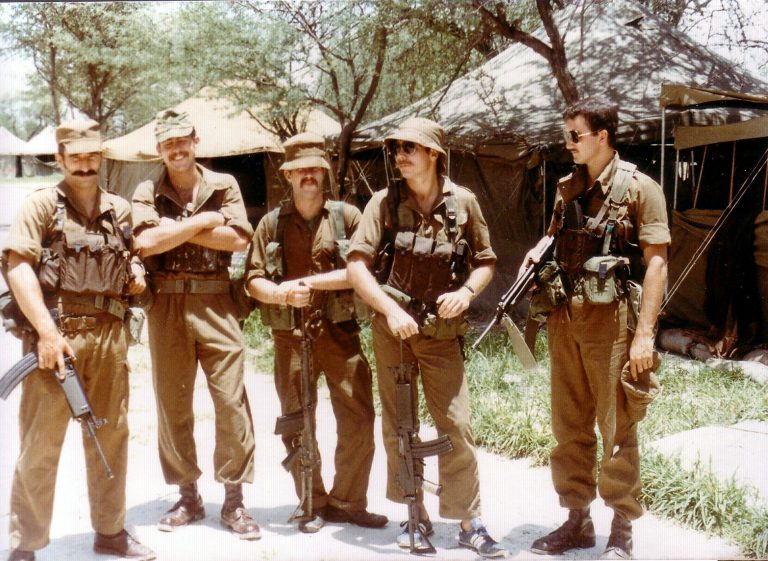
War is often described in broad terms: campaigns, strategies, and political outcomes. Philistine takes a different approach. It follows one man, Mark Griffiths, and the small group of soldiers he served with during the conflicts on the southern African frontier in the early 1980s.
The unit he joined was not typical. It was made up of men from different countries, backgrounds, and experiences, brought together by circumstance rather than uniformity. They became known as “the Philistines,” a name that reflected both their outsider status and the rough, improvised nature of their work.
Much of the book unfolds far from anything that resembles a conventional battlefield. The setting is the African bush: vast, unforgiving, and often as dangerous as any enemy force. Patrols moved through dry terrain, thick vegetation, and remote tracks where help was never close at hand. The threat was constant, but rarely visible.
Encounters with the enemy were unpredictable. One day might pass in silence, the next could shift suddenly into violence. The opposition varied as well, from small guerrilla groups to better-organised forces supported by foreign advisers. There was little certainty about who might be encountered, or when.
Philistine captures these moments without embellishment. There are no grand speeches or dramatic reconstructions. Instead, the story is built from what was actually experienced: the tension of moving through uncertain ground, the sudden shock of contact, and the practical realities of operating in isolation.
What gives the book its strength is its focus on detail. It shows how soldiers lived day to day, how decisions were made under pressure, and how quickly situations could change. Small things mattered: the condition of a road, the reliability of a vehicle, the availability of water. These details shaped outcomes as much as any larger plan.
The people in the story are equally varied. Alongside the soldiers are a range of unexpected figures, including local civilians, informants, and others drawn into the conflict in unusual ways. Their presence adds to the sense that this was not a clear-cut war, but a complex and often confusing environment.
Despite the subject, Philistine is not written to glorify war. It presents it plainly, without attempting to impose meaning where there may have been none at the time. The result is a narrative that feels immediate and grounded, allowing the reader to understand events as they unfolded.
For those with an interest in military history, the book offers a perspective that is rarely seen. For general readers, it provides an accessible entry into a lesser-known conflict, told through the experiences of someone who was there.
At its core, Philistine is a personal account. It is about movement, uncertainty, and survival, set against a backdrop that is both harsh and unpredictable. It does not seek to explain everything. Instead, it shows what it was like to be there.
Philistine: Small-Unit Operations and Irregular Warfare on the Angolan Frontier
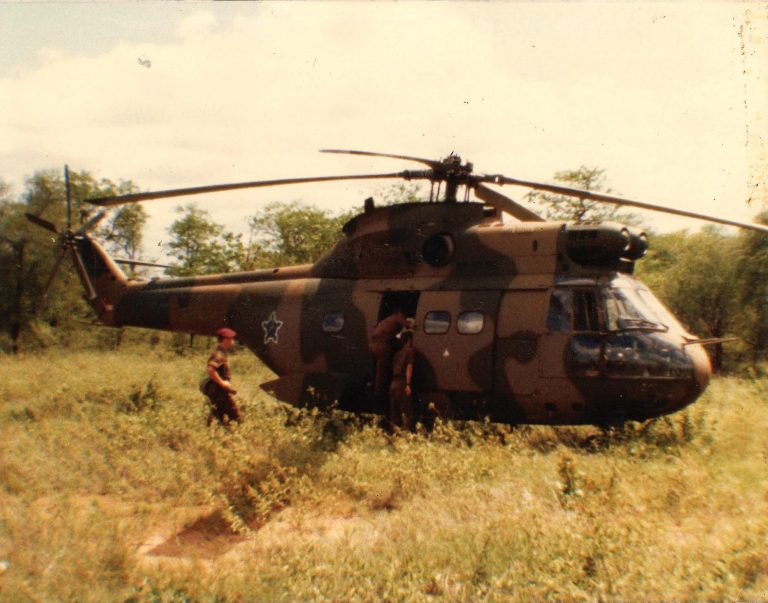
Philistine presents a first-hand account of small-unit operations conducted during the southern African border conflicts of the early 1980s. The narrative follows Mark Griffiths, operating within a composite unit informally known as “the Philistines,” a group characterised by its mixed nationalities, unconventional structure, and operational flexibility.
The operational environment was defined by distance, limited infrastructure, and an adversary capable of shifting between guerrilla tactics and conventional support structures. Contacts ranged from dispersed insurgent elements to better-equipped formations supported by foreign advisers. This required a constant recalibration of movement, engagement rules, and logistical planning.
Mobility was central. Patrols were typically vehicle-based, using platforms such as Sabres for rapid insertion and extraction across large distances. For covert ops, the re- invention of the Q- Car. However, vehicle movement increased exposure to mines and ambushes, particularly along predictable routes and choke points such as culverts, bridges, and narrow tracks. Engineers were therefore routinely integrated into convoy elements, tasked with route clearance and risk mitigation.
Dismounted patrols remained essential in areas where terrain restricted vehicle movement or where stealth was required. These operations demanded a high degree of fieldcraft: tracking, counter-tracking, observation discipline, and the ability to operate with minimal resupply. Water, rather than ammunition, often dictated operational limits.
Engagements were typically short and violent. The difficulty lay not in initiating contact, but in identifying the nature of the opposition before committing fully. Guerrilla units could disperse rapidly, while encounters with more organised forces required immediate transition to coordinated fire and manoeuvre. In several instances, contact escalated from routine patrol encounters to engagements involving heavier weapons and indirect fire.
Command and control were necessarily decentralised. Junior leaders were expected to make rapid decisions without higher-level direction, often based on incomplete information. Communications were limited by terrain and equipment, reinforcing the need for initiative at section and platoon level.
Philistine also addresses the less formal aspects of the conflict. Intelligence was often derived from unconventional sources, including local populations and turned operatives. The reliability of such sources varied, introducing an additional layer of uncertainty. Misidentification, conflicting reports, and deliberate misinformation were persistent challenges.
The book does not attempt to impose retrospective analysis on these events. Instead, it presents them as they were experienced: fragmented, immediate, and often unresolved. The emphasis remains on what was seen, done, and recorded at the time.
For a professional readership, Philistine offers value as a case study in small-unit adaptability under fluid conditions. It highlights the importance of mobility, decentralised command, and environmental awareness in irregular warfare contexts. It also illustrates the limitations inherent in operating with incomplete intelligence and extended supply lines.
Rather than framing the conflict in strategic terms, the account remains at ground level. It is concerned with movement, contact, and survival. In that respect, it provides a practical insight into the realities faced by soldiers operating in a complex and shifting battlespace.
The Trackers of the Bush: Quiet Skills in an Unconventional War
In most accounts of modern warfare, attention settles on weapons, vehicles, and strategy. Yet in the remote fighting of southern Africa during the early 1980s, one of the most effective assets carried no equipment at all. He walked at the front of the patrol, barefoot, and read the ground as if it were a map.
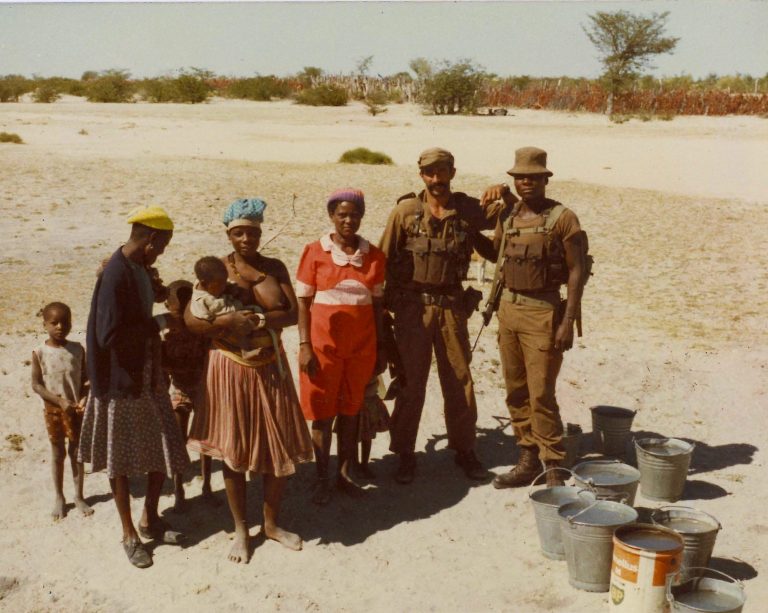
In Philistine, Mark Griffiths describes operations where the outcome of a patrol could hinge on the presence of San trackers. Drawn from desert, these men brought a form of knowledge that no formal training could replicate. Their skill lay not in technology, but in observation, memory, and an instinctive understanding of the environment.
To those unfamiliar with tracking, the terrain often appeared empty. Dry earth, scattered grass, and hard-packed sand revealed little to the untrained eye. Yet to these trackers, the surfaces held detail. A faint scuff, a displaced pebble, or a subtle change in vegetation could indicate not only that someone had passed through, but how many, how recently, and in what direction they were moving.
Their presence changed how patrols operated. Instead of moving broadly through an area hoping to make contact, units could follow a specific trail. This brought a level of precision that reduced uncertaint it did not however remove danger. Following a track would lead into an ambush. The difference was that the patrol moved with awareness rather than guesswork.
Communication was rarely formal. The trackers explained their reasoning in detail. A hand signal, a pause, or a slight shift in direction was often enough. Over time, trust developed through consistency.
The relationship between soldiers and trackers remained practical. They were not integrated in the conventional sense, nor did they operate within the same framework. Each brought a distinct role. The soldiers provided protection, transport, and firepower. The trackers provided direction and insight into a landscape that could otherwise conceal everything.
Philistine presents these details without embellishment. The trackers are not treated as background figures or curiosities, but as professionals working within the same operational space. Their contribution was quiet, often unnoticed beyond those directly involved, yet it could determine whether a patrol found its target or walked past it entirely.
In a conflict where visibility was limited and information uncertain, the ability to read the ground offered a rare advantage. It was not dramatic, and it did not draw attention to itself, but it worked.